One of the first questions founders and business owners ask when considering a custom software project is: "How long will this take?" It is a fair question, and the honest answer is: it depends — but not in an unhelpful way.
Understanding the phases of software development and how long each one realistically takes helps you plan your budget, manage your team's expectations, and avoid the frustration of a project that always seems to be "almost done."
This guide breaks down the software development timeline for Australian businesses in 2026, covering MVPs, web applications, internal tools, and more complex systems. Whether you are a startup founder planning your first build or a business owner replacing a legacy system, this should give you a realistic picture of what to expect.
Why Timelines Vary So Much
Before diving into numbers, it helps to understand why two seemingly similar projects can have very different timelines.
The main factors are scope, integration complexity, team capacity, and decision speed on the client side. A simple web application with a database, a login screen, and a handful of screens might take 8–12 weeks. Add Xero integration, a custom reporting engine, a mobile companion app, and multi-tenancy, and you are looking at 6–9 months — possibly longer.
Scope creep is one of the biggest timeline killers. A 20% increase in scope during development typically extends the timeline by 30–40%, because the extra work lands on a team already mid-sprint with other commitments.
The other underappreciated factor is client-side responsiveness. Projects slow down when feedback on designs takes two weeks instead of two days, or when stakeholders cannot agree on requirements during discovery.
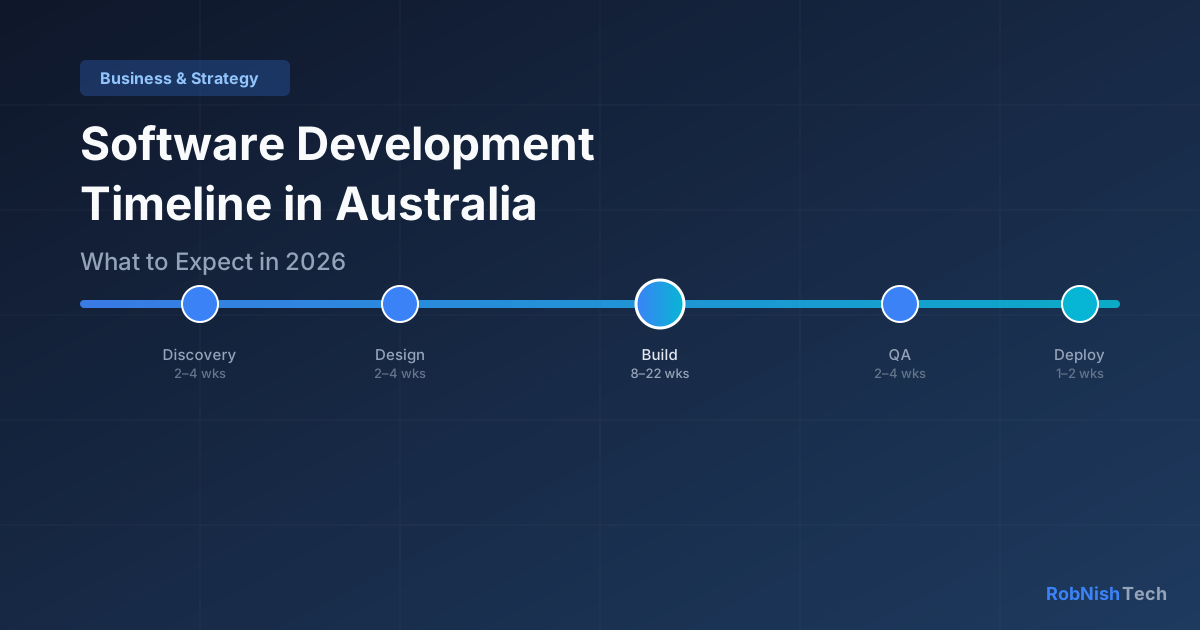
Phase 1: Discovery and Scoping (2–4 Weeks)
Every well-run software project begins with a discovery phase. This is where you define what you are building, who it is for, and what "done" looks like.
During discovery, a good development team will map out the user flows, identify integration requirements, clarify the technology choices, and produce a written scope document. For many projects, discovery also includes wireframes or low-fidelity prototypes.
For a typical SMB or startup project in Australia, discovery runs two to four weeks. Larger or more complex projects — multi-department enterprise systems, regulated industry platforms — can require six to eight weeks.
Skipping or rushing discovery is one of the most common causes of blown budgets. The cost of clarifying requirements before writing code is a fraction of the cost of changing direction mid-build.
At RobNish Tech, our development process starts with a structured discovery workshop that produces a clear scope, a realistic estimate, and a project plan before any code is written.
Phase 2: Design and Architecture (2–4 Weeks)
Once scope is agreed, the next phase covers UI/UX design and technical architecture. For smaller projects this happens quickly — a week or two for wireframes and design review, another week to finalise the technical approach. For larger systems, this phase runs concurrently with early development and can stretch to four weeks or more.
Decisions made here — database structure, API design, authentication approach, hosting model — have long-term consequences. Getting architecture right at this stage is significantly cheaper than refactoring it after six months of development.
Phase 3: Development (Varies by Project Type)
Development is where the bulk of time is spent, and this phase varies most depending on what you are building. Here are realistic ranges for common project types in Australia in 2026:
MVP (Minimum Viable Product): 8–16 Weeks
An MVP is a focused first version with the core features needed to validate an idea or demonstrate to investors. The goal is working software, not a polished product. Cutting scope is the primary lever for hitting the short end of this range. See our guide on how to build an MVP for investors in Australia for a detailed breakdown of what to include.
Internal Business Tool or Workflow Automation System: 8–16 Weeks
These projects are often well-scoped but require careful integration with existing systems — accounting platforms, CRMs, databases. The complexity of integration work is usually what drives timelines up. Our API integration and automation service covers this type of work.
Web Application or SaaS Product: 3–6 Months
A web application with user authentication, a database, dashboards, and core business logic typically takes three to six months for a first production release. Projects with complex data models, payment integration, or multi-tenant requirements sit at the higher end. Our web application development service covers these builds.
Complex Enterprise System or Full Platform Rebuild: 6–18 Months
Large-scale builds involve multiple modules, deeper integrations, stricter testing and security requirements, and broader stakeholder involvement. These projects are planned in stages, with phased delivery where possible.
Phase 4: Testing and Quality Assurance (2–4 Weeks)
Testing runs throughout development in a well-organised project, but there is always a dedicated QA phase before launch. This includes functional testing, integration testing, performance testing where relevant, and user acceptance testing (UAT) with the client.
For most projects, allow two to four weeks for this phase. Larger or more complex systems may need longer. Skipping thorough QA to ship faster is a short-term saving with long-term costs — bugs found in production are more expensive to fix and more disruptive to your users than bugs found in testing.
Phase 5: Deployment and Launch (1–2 Weeks)
Deployment covers moving the application from a staging environment to production, configuring hosting and infrastructure, setting up monitoring, and handling the go-live process. For most projects this is one to two weeks, including final checks and any cutover activities such as migrating data from a legacy system.
RobNish Tech handles cloud and deployment support including Cloudflare, AWS, and Firebase — and we include deployment planning from the start of a project, not as an afterthought.
Phase 6: Post-Launch Support (Ongoing)
Launch is not the end of the project. Most software needs a period of active post-launch support — fixing edge cases that only appear in production, adding small features that users request early, and monitoring performance.
Budget for at least four to eight weeks of active post-launch support, and a longer-term arrangement if you need ongoing changes or new feature development. This is particularly important for customer-facing products and SaaS platforms where user feedback drives the next round of improvements.
Summary: Realistic Software Development Timelines in Australia
Timeline at a Glance
Use these ranges as a planning starting point. Your actual timeline will be refined during discovery, once requirements are clearly defined.
| Project Type | Discovery | Build | QA + Deploy | Total |
|---|---|---|---|---|
| MVP | 2–3 weeks | 8–12 weeks | 2–3 weeks | 3–4 months |
| Internal tool / automation | 2–3 weeks | 8–14 weeks | 2–4 weeks | 3–5 months |
| Web application / SaaS | 3–4 weeks | 12–22 weeks | 3–4 weeks | 4–7 months |
| Enterprise / complex platform | 4–8 weeks | 20–60+ weeks | 4–8 weeks | 7–18+ months |
These ranges assume a clear scope, responsive client feedback, and a capable development team. Scope changes or unclear requirements will extend every phase.
What You Can Do to Keep Your Project on Track
The best way to hit your timeline is to be a clear and responsive client. That means reviewing and approving designs promptly, making scope decisions during discovery rather than mid-build, having a named person who can answer questions from the development team, and being realistic about what the first release needs to include.
It also means choosing a development partner who manages scope carefully, communicates proactively, and flags risks early — not one who says "yes" to everything upfront and explains the overrun at the end.
Our custom software development service is designed around clear scoping, realistic estimates, and transparent progress throughout the build.
Frequently Asked Questions
How long does it take to build a custom software application in Australia?
Timelines depend on project complexity. An MVP typically takes 3–4 months end-to-end. A web application or SaaS product usually takes 4–7 months. Complex enterprise systems can take 7–18 months or more. The discovery and scoping phase — usually 2–4 weeks — is where you get a more precise estimate for your specific project.
What is the discovery phase in software development?
Discovery is the planning phase that happens before development begins. It involves mapping out requirements, defining user flows, identifying integrations, making technology decisions, and producing a written scope and estimate. A proper discovery phase typically takes 2–4 weeks and significantly reduces the risk of overruns during development.
What causes software projects to run over time?
The most common causes are scope changes during development, unclear or incomplete requirements at the start, slow feedback from stakeholders, underestimated integration complexity, and insufficient QA time. Investing in a thorough discovery phase and maintaining clear communication throughout are the best ways to stay on schedule.
How much does custom software development cost in Australia?
Cost is closely linked to timeline. A simple MVP might cost $20,000–$60,000. A mid-range web application or internal system typically runs $60,000–$150,000. Complex platforms cost more. Most reputable Australian development companies charge between $120 and $200+ per hour depending on team size and specialisation.
Can I get a fixed-price quote for my software project?
Yes, but it requires a clear scope. Fixed-price contracts work well when requirements are well-defined up front — which is why a discovery phase matters. Without a clear scope, a fixed-price quote is really just a number the developer will need to revisit when requirements change.
Should I build an MVP first or go straight to a full product?
For most startups and early-stage projects, an MVP is the right call. It lets you validate your idea, get real user feedback, and adjust direction before investing in a full build. A focused MVP typically takes 3–4 months and gives you working software you can show to users or investors.
Need Help With Your Next Project?
We build custom software, integrate AI, and automate workflows for businesses across Australia.
Get in Touch