Most software projects do not fail because the code is bad. They fail because nobody agreed on what was actually being built before development started.
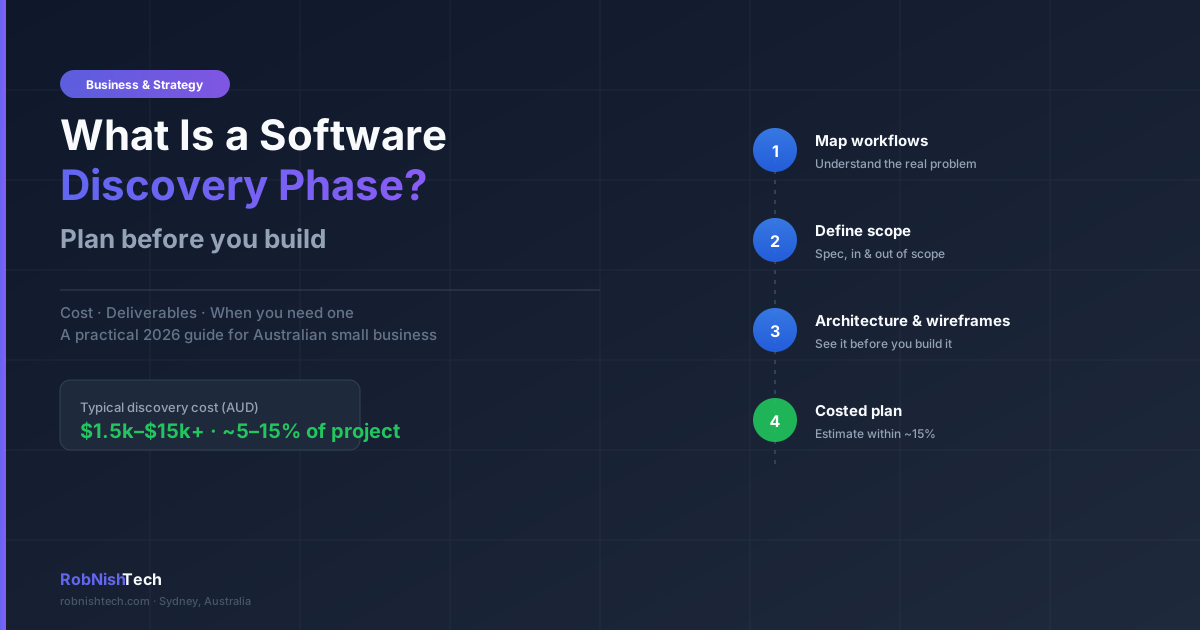
A software discovery phase is the structured first stage of a custom software project, run before any code is written, where the development team maps your real workflows, defines exactly what the software will and will not do, and produces a documented plan, architecture, and cost estimate you can rely on.
This guide is for Australian small business owners, operations managers, and founders who are about to commission custom software, a web application, or an MVP — and want to understand whether a discovery phase is worth paying for, what it should deliver, and what it costs in 2026.
What Is a Software Discovery Phase?
The discovery phase is the planning and requirements stage that happens before development begins. Think of it the way an architect produces drawings, structural calculations, and a fixed quote before a builder pours a single slab of concrete.
During discovery, an experienced team works with you to understand the problem properly: your business goals, how your team actually works day to day, where the friction sits, and what success looks like. It is not a sales call and it is not a vague kickoff meeting. It is a deliberate piece of work with defined outputs.
The key shift is this — discovery is about uncovering the right problem to solve, not just writing down the first solution you had in mind. Most businesses arrive with a solution already in their head ("we need an app that does X"). A good discovery process tests that assumption against the actual workflow and often finds a simpler, cheaper, or more valuable path.
A useful way to think about it: discovery turns "we think we need software" into "here is exactly what we are building, why, what it costs, and how long it takes."
Why Skipping Discovery Costs More
It is tempting to skip discovery to save money and move faster. For small projects with a very clear scope, that can be reasonable. For most custom software, skipping it is where budgets quietly explode.
When a project starts without proper discovery, requirements get discovered during development instead — which is the most expensive possible time to find them. A feature that takes a day to redesign on paper can take three weeks to rebuild once it is half-coded and tangled into the rest of the system.
Industry guidance consistently shows the value of doing this work upfront. Projects that run a proper discovery phase tend to land their budget estimates within roughly 15% of the final figure, while projects that skip it commonly run two to three times over their original quote. The discovery work that feels like a cost is usually the cheapest insurance you can buy on the rest of the project.
There is a planning benefit too. Discovery forces the hard conversations — priorities, trade-offs, what is out of scope — at the point where changing your mind is free.
Key Takeaway
A discovery phase is not an extra cost on top of your project. It is the stage that protects the budget for the other 90%. Estimates produced after proper discovery are far more accurate than a quote based on a rough brief.
What a Discovery Phase Delivers
A discovery phase should produce concrete, written outputs — not just a conversation. If a provider cannot tell you what you will physically receive at the end, that is a red flag.
Typical deliverables from a custom software discovery phase include:
- A requirements specification. A clear, written description of what the software must do, captured as features and user stories, with explicit notes on what is out of scope.
- Workflow and process maps. Your real current process, documented — including the messy parts people work around — and the proposed future process the software will support.
- A technical architecture overview. How the system will be structured: the major components, key technology choices, integrations (such as Xero, Stripe, or a CRM), and data model at a high level.
- Wireframes or a clickable prototype. Low-fidelity screens or a simple interactive mockup that show structure and flow, so you can see and react to the product before it is built.
- A prioritised feature roadmap. Features ordered by business value, usually split into a launch release and later phases.
- A realistic estimate and project plan. A timeline with phases and milestones, plus a cost estimate that is grounded in the documented scope rather than a guess.
Not every project needs every item. A small internal tool might need a tight spec and a quick architecture note. A SaaS platform or investor-facing MVP will usually justify wireframes and a prototype as well. The point is that you finish discovery holding documents you can act on — including taking them to another provider if you choose to.
How Much Does a Software Discovery Phase Cost in Australia?
Discovery is usually priced as a fixed-fee engagement, separate from the build, and most providers will credit some or all of it toward the project if you proceed.
As a rough guide for the Australian market in 2026:
- Small projects (internal tools, simple web apps): often AUD $1,500–$5,000, or sometimes folded into a free initial scoping conversation for tightly defined work.
- Mid-sized custom software and web applications: typically AUD $5,000–$15,000, depending on the number of workflows, integrations, and stakeholders involved.
- Larger platforms, SaaS products, and complex integrations: AUD $15,000 and up, where multiple user types, data migration, and several third-party systems are in scope.
A common rule of thumb internationally is that discovery represents around 5–15% of total project cost. That holds reasonably well in Australia too — the larger and riskier the build, the more discovery is worth investing in.
Be cautious of two extremes. A provider who wants a large discovery fee for a tiny, obvious project may be over-engineering it. A provider who promises a fixed all-in build price for a complex system without any discovery is almost certainly guessing, and that guess usually becomes a change request later. For more on how quotes are structured, see our guide on how much custom software costs in Australia; for provider selection, use the checklist in our custom software developer hiring guide.
When Does Your Small Business Need One?
Discovery is not always necessary. Here is a practical way to decide.
You probably need a discovery phase if:
- The software touches more than one team or process, or replaces a system people rely on daily.
- You need to integrate with accounting, payments, or a CRM (for example Xero, Stripe, or HubSpot).
- You are building an MVP or product that investors, customers, or a grant body will scrutinise.
- Several people have different ideas about what the software should do.
- The budget is large enough that a 50% overrun would genuinely hurt.
You can probably keep it light if:
- The scope is small, single-purpose, and you can describe it in a paragraph.
- There are no external integrations and only one type of user.
- You have built something similar before and know exactly what you want.
Even in the "keep it light" case, you still want some written scope — just proportionate to the project. The goal is never bureaucracy for its own sake. It is making sure the money you spend on development goes toward building the right thing.
For projects where you are still deciding between building custom or buying off-the-shelf, our custom software vs SaaS guide is a useful companion read before you commit to a discovery engagement.
How RobNish Tech Runs Discovery
At RobNish Tech, discovery is the first stage of our development process, and we run it before quoting a full build on anything beyond a simple, well-defined task.
In practice, that means a focused engagement where we map your current workflow, define the features and user flows that matter, identify the integrations and technical risks early, and produce a scoped feature list with a realistic estimate and timeline. For product and MVP work, we will usually include wireframes or a simple prototype so you can see the shape of the product before committing to the build.
You finish with documentation you own — a spec, an architecture overview, and a costed plan — whether you build with us or not. That is the standard a good discovery phase should meet.
You can read more about our custom software development and MVP and SaaS development services, or get in touch to talk through your project.
Frequently Asked Questions
What is a software discovery phase?
A software discovery phase is the structured planning stage of a custom software project, completed before development starts. The team maps your business workflows, defines the requirements and scope, designs a high-level technical architecture, and produces a costed plan and timeline. The goal is to confirm exactly what will be built, why, and what it will cost — before any expensive development work begins.
How long does a discovery phase take?
For most Australian small business projects, discovery takes between one and four weeks. A small internal tool might need only a few days of focused work, while a larger platform with multiple integrations and stakeholders can take several weeks. The timeline depends on how many workflows are involved, how many people need to be consulted, and whether wireframes or a prototype are included.
How much does a software discovery phase cost in Australia?
In 2026, discovery typically costs from around AUD $1,500–$5,000 for small projects, AUD $5,000–$15,000 for mid-sized custom software and web applications, and $15,000 or more for large platforms and complex integrations. As a rule of thumb it represents roughly 5–15% of total project cost. Many providers credit part or all of the discovery fee toward the build if you proceed.
Do I really need a discovery phase for a small project?
Not always. If the scope is small, single-purpose, has no external integrations, and you can describe it clearly in a paragraph, a lightweight written scope may be enough. Discovery becomes important when the software touches multiple teams, needs integrations, supports an MVP or investor pitch, or carries a budget large enough that a significant overrun would hurt.
What do you get at the end of a discovery phase?
You should receive concrete written deliverables: a requirements specification with clear in-scope and out-of-scope items, workflow maps, a high-level technical architecture, often wireframes or a clickable prototype, a prioritised feature roadmap, and a realistic estimate with a project timeline. These documents are yours to keep and can be taken to any provider to build.
Is the discovery fee separate from the build cost?
Usually, yes. Discovery is typically priced as a fixed-fee engagement, separate from development, so the planning work has clear scope and value of its own. Many Australian providers, including RobNish Tech, will credit some or all of the discovery fee toward the build if you decide to proceed, which lowers the effective cost of the planning stage.
Need Help With Your Next Project?
We build custom software, integrate AI, and automate workflows for businesses across Australia.
Get in Touch